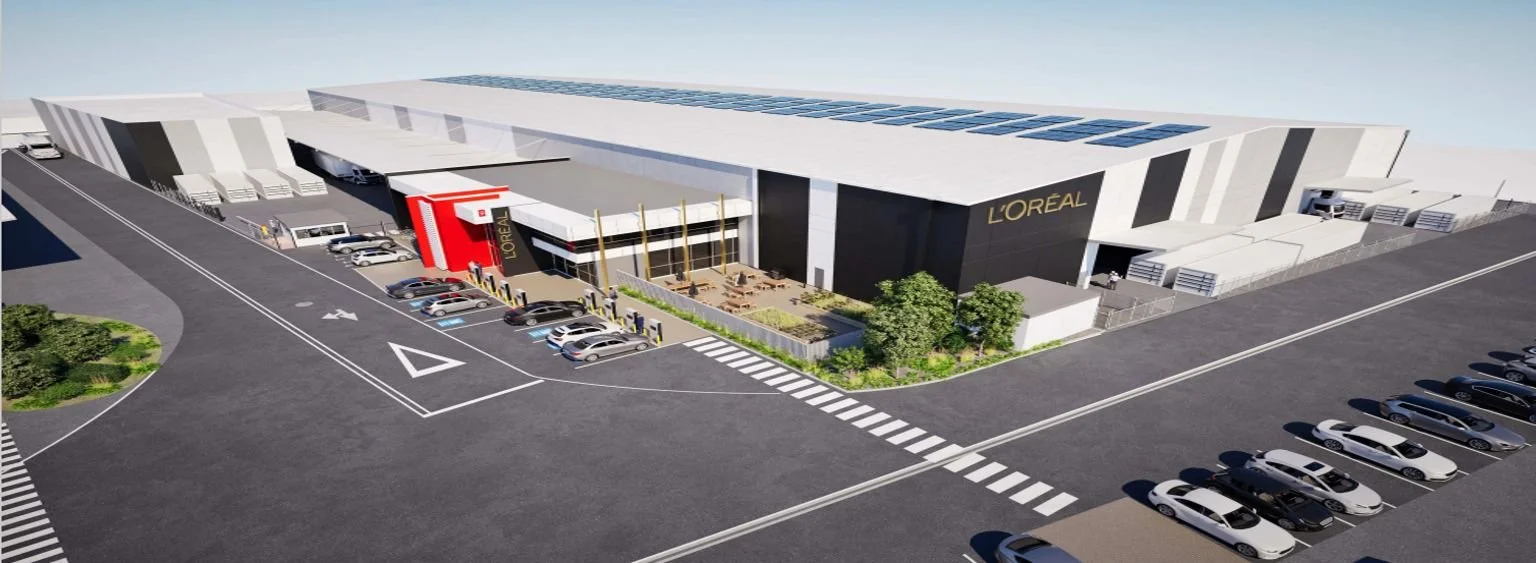
Designing Fire Protection for High-Risk Warehouse and Dangerous Goods Facilities
Large-scale distribution centres introduce a very different fire risk profile compared to standard commercial or industrial buildings. High storage volumes, specialised products, and operational intensity demand fire protection systems that are purpose-designed, not adapted after the fact.
The L’Oréal Distribution Centre and Dangerous Goods Store is a clear example of where early, specialist fire protection input makes a measurable difference.
Project context
The project involved a large warehouse facility designed to support complex storage requirements, including dangerous goods and polar solvents. The scale of the site and the nature of the stored materials required fire protection systems that went well beyond conventional sprinkler layouts.
From the outset, the brief was not simply to achieve code compliance, but to design a system that aligned with operational risk, insurer expectations, and international best practice.
Understanding the risk profile
Warehousing environments introduce layered fire risks:
High-density racking and storage heights
Specific commodity hazards linked to stored products
Fire load variability across different zones
Operational continuity requirements
Insurer-driven performance expectations
In this case, standard sprinkler protection alone was not sufficient to manage the risk associated with dangerous goods storage.
Design response
A bespoke fire protection solution was developed to align with the site’s storage requirements and operational use.
The system design included:
Sprinkler systems tailored to the storage configuration
A high-expansion foam suppression system for dangerous goods areas
FireDos proportioning equipment and BELE S800 foam generators
Integration of New Zealand compliance requirements with NFPA and FM Global Data Sheet criteria
This approach ensured the system was not only compliant with local regulations, but also aligned with international fire protection standards commonly required by global insurers and operators.
Coordination with the wider project team was critical. Fire protection design was developed alongside architectural, structural, and MEP services to ensure constructability, system performance, and long-term reliability.
Outcome
The completed fire protection systems provide:
Targeted protection aligned with actual storage hazards
Improved resilience for high-risk areas
Compliance across multiple regulatory frameworks
Confidence for both building operators and insurers
Most importantly, the system was designed to perform under real-world conditions, not just on paper.
Key takeaway
High-risk warehouse and dangerous goods facilities require early, specialist fire protection input. Waiting until late design stages or treating fire protection as a secondary service increases cost, complexity, and risk.
Purpose-designed fire protection systems support safer buildings, smoother approvals, and long-term operational confidence.
At Fortis Fire, we work with clients, designers, and contractors to deliver fire protection solutions that are technically robust, coordinated, and fit for how buildings are actually used.
Talk to Fortis Fire about specialist fire protection design for high-risk and complex facilities.