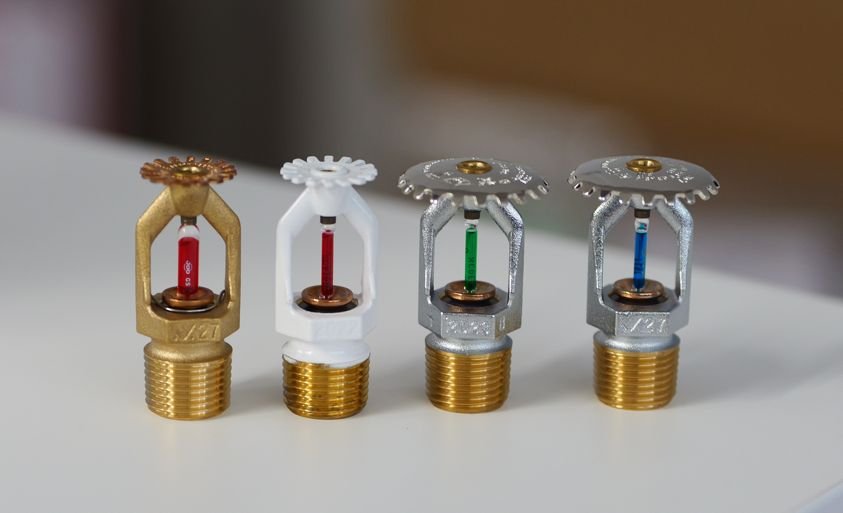
Sprinkler Temperature Ratings Explained. Choosing the Right Rating for the Right Environment
Selecting the correct sprinkler head temperature rating is a fundamental part of fire protection system design.
When the rating is wrong, the consequences are real. Systems may activate unnecessarily, or worse, respond too slowly during a fire. Both outcomes introduce risk, cost, and operational disruption.
Understanding temperature ratings helps ensure systems perform as intended.
Why sprinkler temperature ratings matter
Sprinkler heads are designed to activate once a specific temperature threshold is reached. That threshold must sit safely above normal ambient conditions, while still allowing timely response during a fire.
As a general rule, sprinkler ratings should be at least 30°C above the expected ambient temperature at the head location.
Designers must consider more than room temperature. Localised heat sources, solar gain, plant equipment, and seasonal variation all influence the environment around the sprinkler.
Common sprinkler temperature ratings
The most commonly used sprinkler temperature ratings include:
Red 68°C
Typically used in general office areas and spaces with ambient temperatures around 30°C.
Green 93°C
Suitable where there is potential for elevated ambient temperatures, such as roof voids or areas exposed to direct sunlight.
Blue 141°C
Used in environments with sustained higher temperatures, including areas near plant equipment or defrost cycles.
Purple 182°C
Often specified for kitchen hoods and similar high-heat environments.
Black 260°C
Reserved for extreme temperature environments where very high ambient heat is present.
Selecting the correct rating is about matching the sprinkler to the environment it is protecting, not defaulting to a standard option.
Factors that influence sprinkler selection
When selecting sprinkler temperature ratings, designers must account for:
Heat generated by plant and equipment
Kitchens and food preparation processes
Heaters and appliances
Direct sunlight and glazing
Roof void temperatures during peak summer conditions
Operational activities specific to the tenant or building use
Ignoring these factors increases the risk of false activation or non-compliant design.
Standard response vs quick response sprinklers
Response type is just as important as temperature rating.
The choice between standard response and quick response sprinklers is typically dictated by the fire engineering report and any associated modelling. These reports assess response time, tenability, and system efficiency based on the building’s layout and use.
Response type should never be assumed. It must align with the approved fire engineering strategy.
Coordination matters
Sprinkler selection is not a standalone decision.
Fire protection consultants must work closely with fire engineers, architects, and building services designers to ensure sprinkler type, temperature rating, and response characteristics align with the broader fire strategy.
This coordination ensures compliance, performance, and long-term reliability.
Designing for performance, not assumptions
Sprinkler systems are expected to perform under real conditions, not ideal ones.
Selecting the right sprinkler temperature rating and response type protects against false activations, supports effective fire control, and ensures systems operate as intended when needed.
Reliable fire protection design starts with understanding the environment, the risk, and the strategy behind the system.
Fortis Fire provides specialist fire protection design grounded in real-world conditions.
Talk to us about selecting sprinkler systems that suit your environment and risk profile.