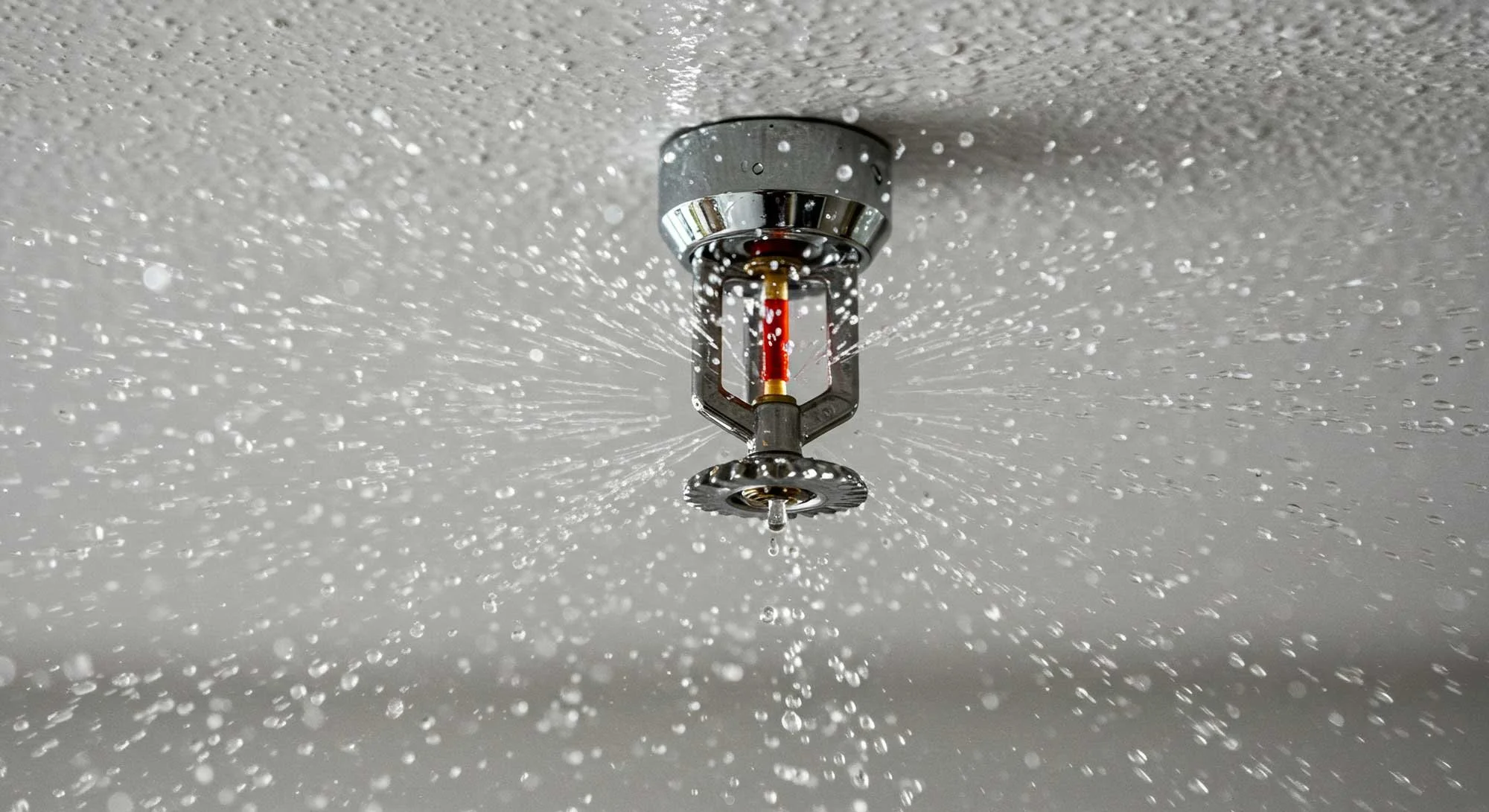
Fire Sprinkler Myths Explained. Why One Sprinkler Does Not Set Off the Whole System
Fire sprinkler systems are often misunderstood.
Much of that confusion comes from how they are portrayed in movies and media.
One of the most common myths is the belief that if a single sprinkler head is damaged or activated, every sprinkler on the floor will discharge and flood the building.
That is not how sprinkler systems work.
How fire sprinklers actually operate
Fire sprinklers are designed to activate individually.
Each sprinkler head contains a heat-sensitive element that remains closed under normal conditions. The head will only activate when it reaches its rated temperature, commonly around 68°C for standard environments.
Only sprinklers exposed to sufficient heat from a fire will operate. A sprinkler in one area activating does not cause other sprinklers to open elsewhere.
There is no chain reaction.
Why accidental damage does not flood buildings
If a sprinkler head is accidentally struck or damaged, it does not trigger system-wide activation.
At most, water will discharge from that single sprinkler head. Other sprinklers remain closed unless their individual heat-sensitive elements are activated by fire.
This is why damage in one location, such as a basement car park, will not result in sprinklers operating on other floors or in unrelated areas.
Why this myth persists
The idea of all sprinklers activating at once makes for dramatic scenes, but it does not reflect real system design.
Modern sprinkler systems are engineered to control fires efficiently while minimising unnecessary water damage. Individual activation is a core part of that design philosophy.
What to do if a sprinkler head is damaged
While a damaged sprinkler head will not flood an entire building, it should still be treated as urgent.
A damaged head compromises system readiness and must be inspected and replaced promptly. Leaving it unattended increases risk if a fire occurs before repairs are made.
Fire protection systems rely on every component being functional.
Designed to protect life and property
Sprinkler systems are one of the most effective fire protection measures available. They are designed to suppress or control fires early, protect occupants, and reduce property damage.
Understanding how systems actually work helps building owners and occupants respond appropriately and maintain confidence in their fire protection systems.
Myths may make good entertainment.
Good design saves lives and property.
Fortis Fire provides specialist advice on sprinkler system design, performance, and maintenance.
Talk to us if you need clarity around how your fire protection systems operate.