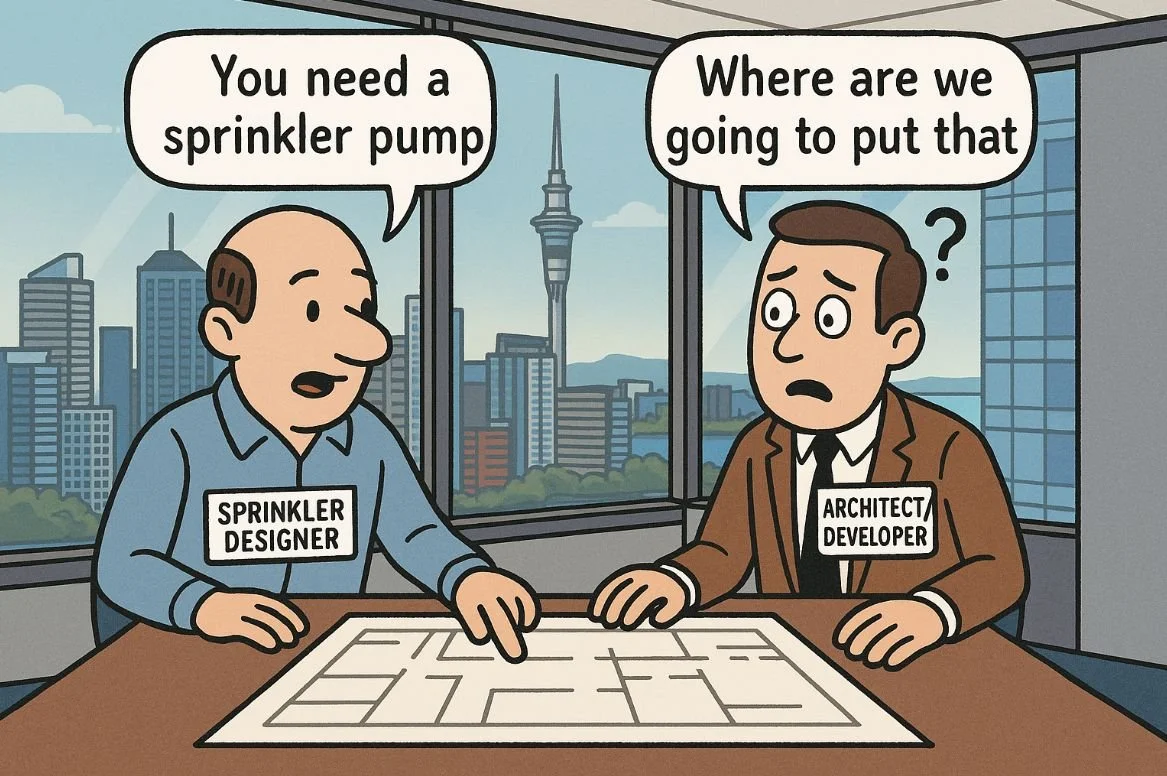
Have You Completed Flow Testing? Why Low-Rise Projects Get Caught Out Without a Booster Pump
Low-rise projects are increasingly being delayed by a familiar issue. Water supply pressure is assumed to be sufficient, until it is not.
Design and build contractors progress through preliminary design, sometimes even into consenting, only to discover that the available town main pressure cannot support the proposed sprinkler system. At that point, a booster pump becomes unavoidable.
By then, the consequences are significant.
Late discovery of inadequate pressure often triggers architectural redesign, loss of consented car parks, increased construction cost, and programme delays. In some cases, projects must re-enter parts of the consenting process.
This issue is avoidable.
Why flow testing matters early
Flow testing and basic hydraulic checks should occur during Preliminary Design, not after building consent is underway.
Early engagement with a fire protection consultant allows the project team to confirm available water pressure, test system assumptions, and plan design contingencies before key decisions are locked in.
This is particularly important on low-rise developments where sprinklers are required but margins are often tight.
Water supply is not guaranteed
Water authorities can reduce supply pressure at any time. This may occur due to network changes, demand management, or infrastructure upgrades.
If a sprinkler system has no allowance for pressure variation, it may no longer comply or perform as intended a few years after construction. Designing to the minimum available pressure without contingency introduces long-term risk.
A system that only just works today may not work tomorrow.
When specialist input is required
If a Fire Report triggers a Type 6 or Type 7 fire protection system requiring sprinklers, specialist fire protection input is essential.
This applies whether the project is delivered traditionally, through early contractor involvement, or under a design and build contract.
Fire protection design is not just about meeting the minimum requirements on paper. It must account for real-world supply conditions and future network changes.
The cost of waiting
Engaging a fire protection consultant early allows for:
Flow testing and confirmation of water supply capacity
Preliminary hydraulic calculations
Early identification of booster pump requirements
Design options to protect car parking, layouts, and cost
Fewer surprises during consent and construction
Early advice costs far less than late redesign.
Design smarter from the start
If you are an architect, developer, or contractor working on a low-rise project with sprinklers, early fire protection input reduces risk and protects programme.
Waiting until late design stages often forces decisions that limit flexibility and increase cost.
Early engagement supports compliance, performance, and buildability, with or without a booster pump.
If you want clarity early, talk to a specialist before assumptions become constraints.