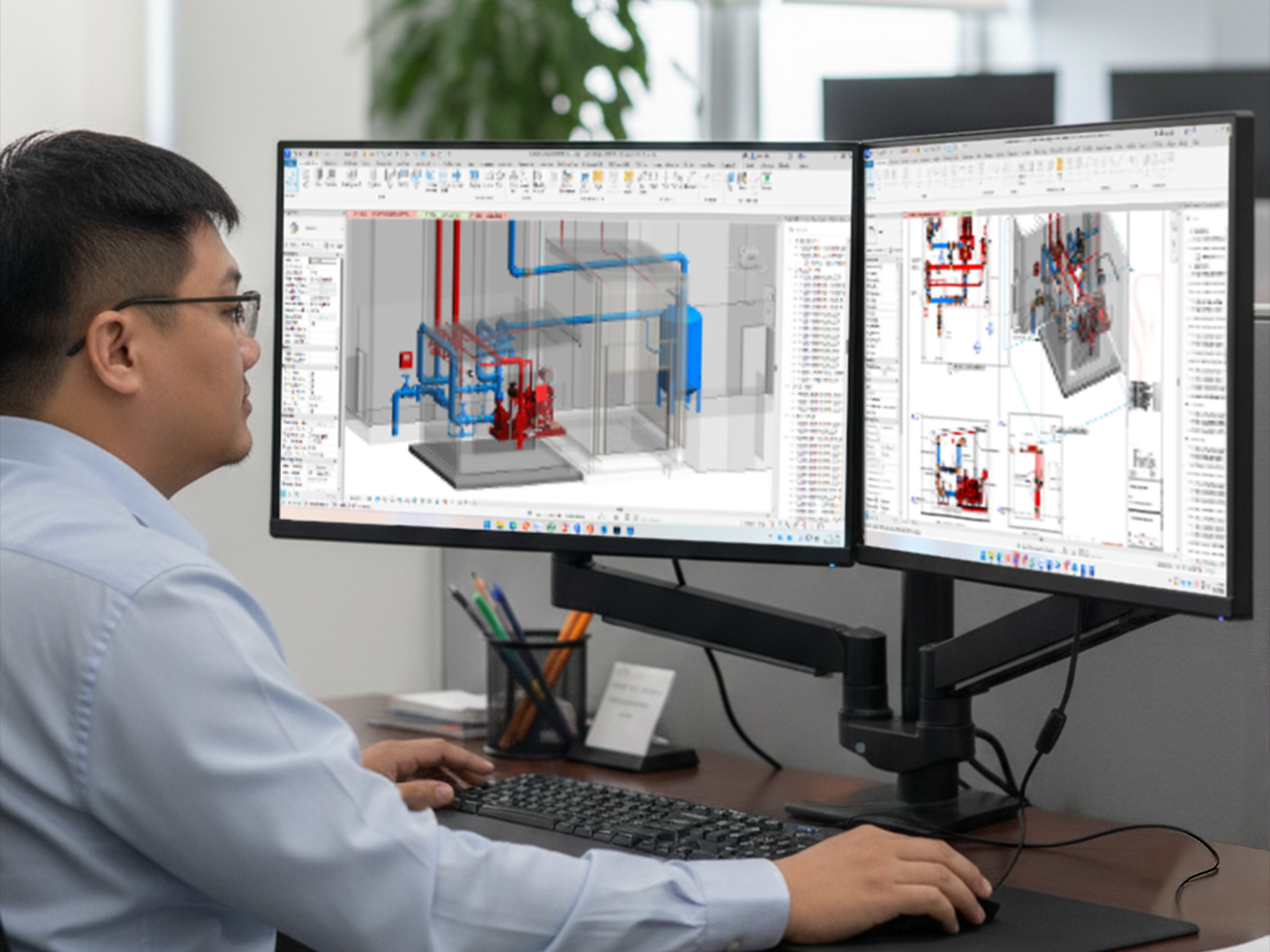
Fire Protection Left Too Late in Design. The Cost of Delayed Integration
Fire protection is rarely forgotten in building design.
More often, it is introduced too late.
Even where a Fire Report clearly identifies the need for a Type 6 or Type 7 system, fire protection is sometimes treated as a downstream service rather than a core design input. That delay creates real commercial risk.
Late integration affects timelines, budgets, and long-term building performance. In many cases, it triggers avoidable redesign of architectural and MEP services.
Why early fire protection integration matters
Fire protection influences building layout, service zones, ceiling coordination, and structural penetrations. When it is embedded from the concept stage, it supports coordinated and efficient design decisions across the project team.
Early engagement allows fire protection to be considered alongside architecture, structure, and MEP services, rather than retrofitted later.
This approach reduces friction and protects design intent.
The benefits of early-stage fire protection design
When fire protection is integrated early, projects benefit from:
Better alignment with architectural layouts and spatial planning
Fewer clashes during multi-disciplinary coordination
Clearer alignment with the fire engineering strategy
Improved system resilience and insurer confidence
Reduced construction delays and cost overruns
More efficient procurement and installation sequencing
Early design input supports both compliance and buildability.
What happens when fire protection is left until shop drawings
Delaying fire protection until the shop drawing stage creates immediate constraints.
By this point, ceiling spaces are congested, service routes are fixed, and structural penetrations are locked in. Fire protection systems must then be worked around existing services, rather than integrated with them.
This often leads to:
Architectural rework to resolve ceiling height or fire rating conflicts
Unplanned redesign costs and tender scope gaps
Increased RFIs and construction-stage delays
Compromised system performance or deviation from the fire report
These outcomes are not design inconveniences. They carry cost, programme, and risk implications.
Fire protection is not just another service
Fire protection directly affects life safety, compliance, and operational continuity.
Treating it as a late addition increases risk and reduces flexibility. Integrating it early allows better decisions to be made while there is still room to move.
Smarter coordination leads to safer buildings and more predictable project outcomes.
Design smarter from the start
Early-stage fire protection design is not about adding complexity. It is about reducing risk.
Embedding fire protection from day one supports coordinated design, protects budgets, and delivers buildings that perform as intended over the long term.
Early fire protection design reduces risk and improves project outcomes.
Talk to Fortis Fire about integrating fire protection from the concept stage.